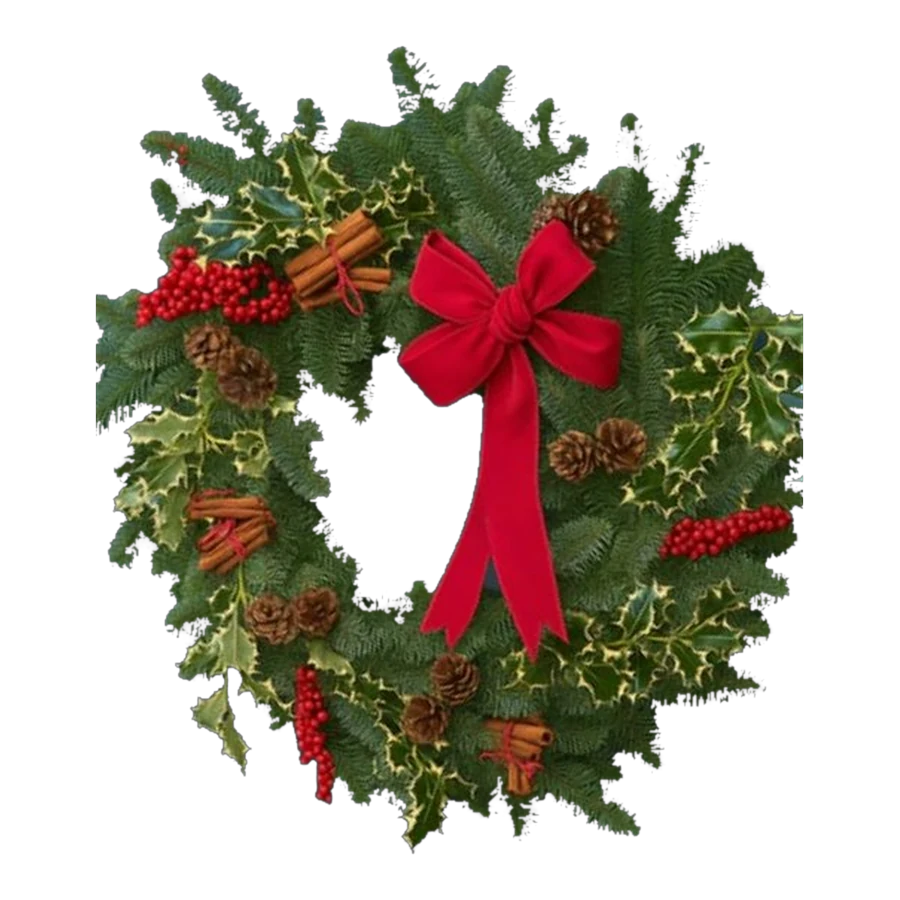
Premium Handmade Door Wreath
Traditional
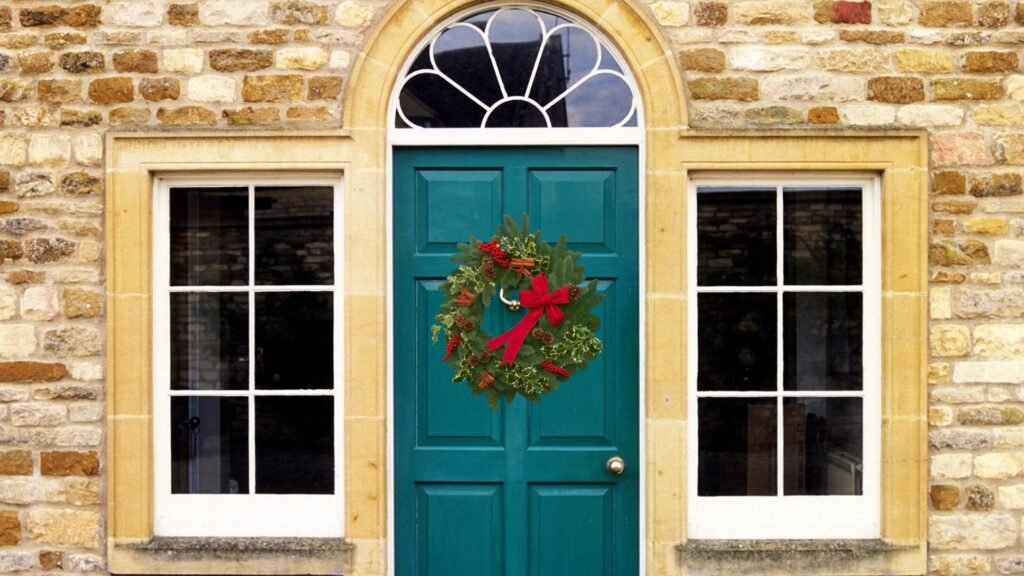
Noble fir and variegated holly with a red velvet bow, red berry clusters, cinnamon bundles and pine cones.
From £45Regular 34cm £45 or Large 65 cm £65
View this wreathChristmas wreath guides
Fresh or fake? Both can look good on a front door, and the right one depends on what you value. This guide compares real and artificial Christmas wreaths on looks, scent, lifespan, upkeep, cost, allergies, safety and the environment, then suggests who should choose which.
By Finnegan Christmas WreathsPublished 9 min read
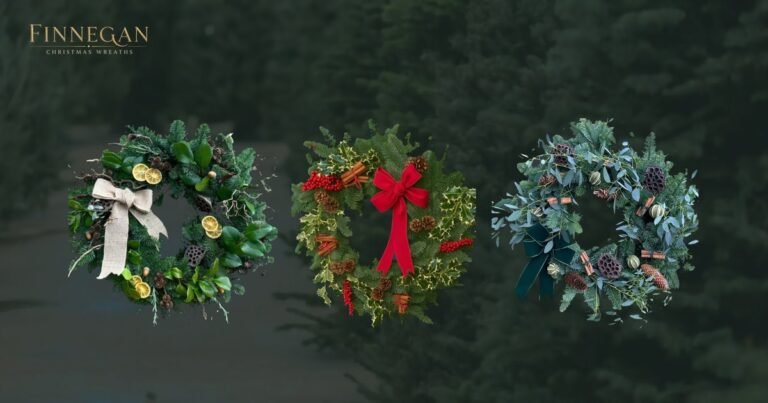
Our Traditional wreath, handmade fresh on the farm
Neither wins outright. A real wreath gives you natural texture and fresh fir scent for one season, then goes in the compost or garden waste. An artificial wreath needs no care and can be reused for years, but has no scent and often contains plastic. Choose by scent, allergies, upkeep and how long you will keep it.
Both kinds can look lovely on a door, so the better choice usually comes down to what matters most to you: scent, upkeep, budget, allergies or how long you want to keep it. This table sets the main points side by side, and the sections below go through each one.
| Real (fresh) | Artificial | |
|---|---|---|
| Appearance | Natural variation in colour and shape. Every wreath is slightly different. | Even and consistent. Quality ranges from very convincing to obviously plastic. |
| Scent | Fresh fir fragrance that fades as it dries. | None, unless you add a scent yourself. |
| Lifespan | One season. See how long a fresh wreath lasts. | Reusable for years if stored well. |
| Upkeep | Cool, shaded spot and a light mist every few days. | Almost none. A dust off before hanging. |
| Storage | None needed after Christmas. | Needs a box and space for the rest of the year. |
| Price | FCW wreaths are from £45. A fresh purchase each year. | Prices vary widely. A one-off cost spread over the years you keep it. |
| Allergies | Some people react to fir sap or fragrance. | No sap or scent, but stored items can collect dust. |
| Fire safety | Dry foliage burns easily. Keep away from flames. | Do not assume it is fireproof. Keep away from flames and heat. |
| Environment | Natural, and compostable once wire and artificial decorations are removed. | Often largely plastic and wire. Its case improves the longer you keep it. |
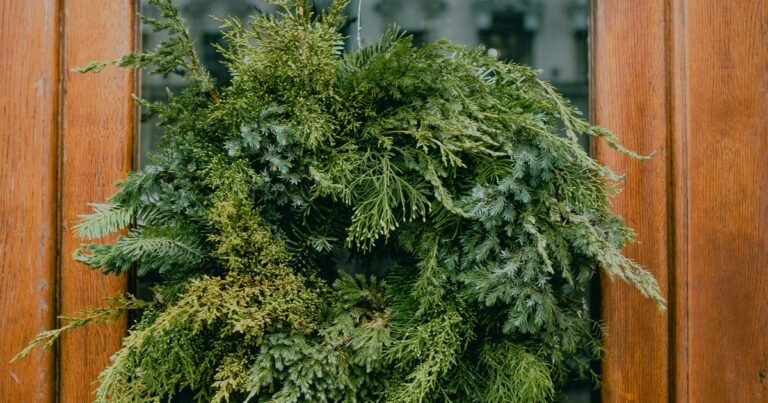
A fresh wreath is made from cut foliage, so it has depth, texture and small differences that no two examples share. The needles catch the light differently, stems curve in their own way, and the whole thing carries a gentle fir scent that many people say is the real start of Christmas.
An artificial wreath gives you a uniform, predictable shape. Well made ones can look good from a distance, and you know exactly what you will get. Up close, the needles and decorations can look more obviously man-made, and there is no fragrance unless you add one.
That natural variation is part of the appeal of a handmade wreath. Ours are made fresh on our family farm in Clogher, County Tyrone, from Noble Fir grown there, so each one differs a little from the next.
This is where the two differ most. A fresh wreath is for one season. In a typical British winter it looks its best for around three to four weeks outdoors, and one to two weeks indoors where it is warm. Our guide to how long a fresh wreath lasts has the detail, and the RHS gives similar timings.
An artificial wreath can come out of its box year after year. That is its biggest strength, but it brings a small job with it. You need somewhere dry to keep it, and a wreath that has been squashed in a loft can need some gentle reshaping before it looks right again.
It depends on how long you keep an artificial wreath, so the honest answer is that neither is always cheaper.
A fresh wreath is a fresh purchase each year. Ours start from £45 for the Regular 34cm size and £65 for the Large 65cm, with free UK delivery, and you can see all three styles in our shop. Artificial wreath prices vary very widely, so look at the actual price and how well it is made rather than assuming it is the cheap option. A well made artificial wreath used for many Christmases can work out cheaper per year. A cheap one that looks tired after a couple of seasons may not.
If you are weighing up where to buy a fresh one, see where to buy fresh handmade Christmas wreaths online in the UK.
Allergies. Some people react to fir sap or fragrance, so a real wreath is not comfortable for everyone. If you know you are sensitive to conifers, or someone in your household is, an artificial wreath may be the easier choice. Stored artificial wreaths can gather dust, so give yours a wipe or a gentle shake outdoors before it goes up.
Fire. Dry foliage burns easily, so keep a real wreath away from candles, open fires, log burners and heaters, and take it down once it feels dry. Artificial wreaths are not automatically safe either. Unless the maker says otherwise, treat them the same way and keep them away from flames and heat.
Small items. Wreaths of either type can carry small decorations, cones, berries and wires. Keep them out of reach of small children and pets.
Think about the positionA real wreath needs a cool spot to last. If your door gets full sun for much of the day, or sits above a heater, an artificial wreath may suit that position better.
This is more complicated than it first looks, and no single answer fits everyone. There is little published research on wreaths specifically. The best-known comparison is about Christmas trees, so here is what it says and what it does not.
The Carbon Trust, looking at real and artificial Christmas trees, says the most sustainable choice depends on the tree, your plans for reuse and how you dispose of it. It says an artificial tree used over multiple years (7 to 20, depending on weight and materials) is better for emissions than buying a new commercially grown tree every year. For real trees, it says replanting a potted tree is the preferred option, chipping one for garden mulch cuts its footprint by up to 80%, and landfill is the worst route because the tree produces methane as it rots. You can read it in The Carbon Trust’s tips for a more sustainable Christmas.
That advice is about trees, not wreaths, so we cannot give a break-even figure for a wreath. The general lessons still carry over:
If you compost a real wreath, take everything that is not natural off first. The RHS advises removing wire, ribbons and plastic-based parts before composting. On our wreaths, that means the wire and any artificial elements, such as the artificial red berry clusters on our Traditional style, which should be removed and thrown away or kept separately. Check your local council’s garden waste rules, as they vary. For a step by step guide, see how to recycle or compost a real Christmas wreath.
There is no wrong answer, just a better fit for your situation.
Some people do both: a fresh wreath on the front door where it looks and smells its best, and a reusable artificial one for an indoor spot they cannot easily keep an eye on.
If you decide on a real one, our three handmade styles are the Traditional, Natural and Contemporary, and our guide to choosing between those styles will help you pick.
Sources and further reading
Fresh or fake questions
Short answers to the questions people ask when choosing between a real and an artificial wreath.
Not for everyone. Real wreaths win on scent, natural looks and compostable materials. Artificial ones win on convenience, reuse and for people who react to fir. The better choice is the one that fits your door, your household and how much care you want to give it.
Some people react to fir sap or fragrance, so an artificial wreath can be more comfortable if you know you are sensitive. Dust can build up on stored wreaths, so wipe one before hanging. If you are unsure, take medical advice.
We cannot give a figure for wreaths. The Carbon Trust’s range of 7 to 20 years applies to Christmas trees and depends on weight and materials. The general point carries over: the longer an artificial wreath is reused, the better its case.
Usually the natural foliage can go in compost or garden waste, but remove wire, ribbons and plastic parts first, as the RHS advises. That includes any artificial decorations. Check your local council’s garden waste rules, as they differ.
They can last many years if stored dry and not crushed, while a fresh wreath lasts a season. Quality varies a lot, though, and a cheap one can look tired after a few Christmases, so long life is not guaranteed.
Dry foliage burns easily, so keep any wreath away from candles, open fires, log burners and heaters, and take it down once it feels dry and brittle. Do not assume an artificial wreath is fireproof either.
Our family farm
Our wreaths are handmade fresh on the Finnegan family Christmas tree farm in Clogher, County Tyrone, using Noble Fir foliage grown on the farm. They are made to order, in small batches, and each one varies slightly because the materials are natural.
Handmade on the farm
Three fresh styles, each built on Noble Fir from our farm, in Regular 34cm from £45 and Large 65cm. Made to order, so each one is freshly made for you.

Premium Handmade Door Wreath
Noble fir and variegated holly with a red velvet bow, red berry clusters, cinnamon bundles and pine cones.
From £45Regular 34cm £45 or Large 65 cm £65
View this wreath
Premium Handmade Door Wreath
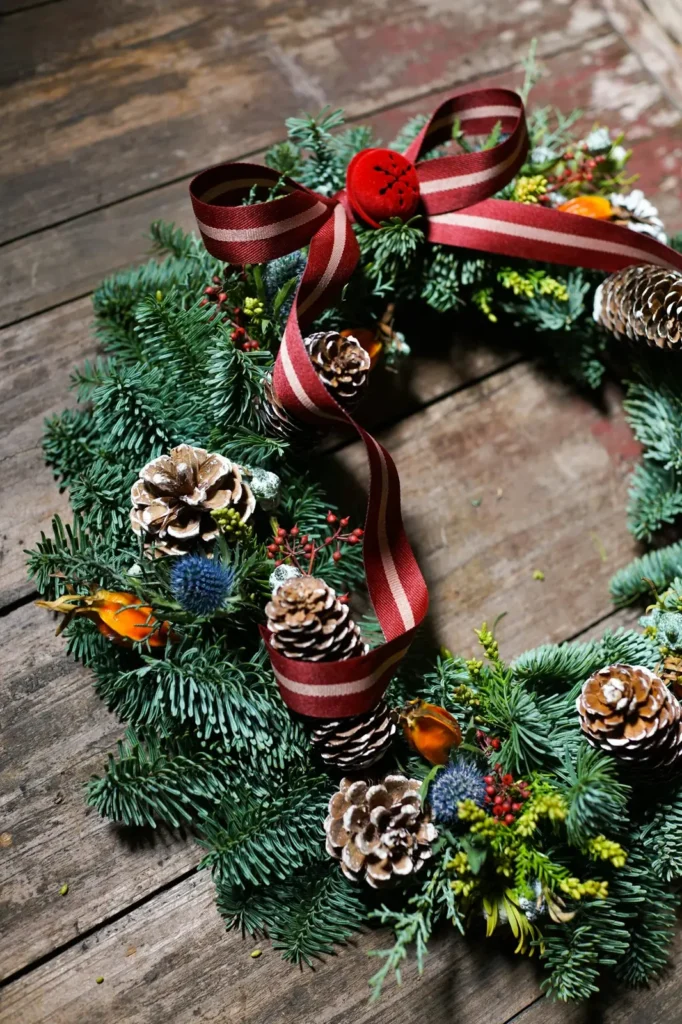
Noble fir and glossy stems with a burlap bow, dried orange, twisted hazel, lotus heads and small pine cones.
From £45Regular 34cm £45 or Large 65 cm £65
View this wreath
Premium Handmade Door Wreath
Noble fir and seasonal greenery with a burlap bow, dried orange, twisted hazel, lotus heads, rosemary and acorns.
From £45Regular 34cm £45 or Large 65 cm £65
View this wreathFree UK delivery on every wreath. Boxed, ready to hang.
From our farm to your door
Discover beautiful handmade Christmas wreaths, crafted fresh on our County Tyrone family farm and delivered across the UK.
Free UK delivery on every wreath
Keep reading

How long a real fir wreath lasts outdoors and indoors, what shortens its life, and how to keep yours looking fresh.
Read the guide
A plain guide to buying a real handmade wreath online: where people shop, what to check before you order, and how our own wreaths measure up.
Read the guide
Compare our traditional, natural and contemporary Christmas wreaths: what each contains, the look, and which front doors and homes each style suits best.
Read the guideAdd Finnegan Christmas Wreaths as a preferred source on Google to help you find more of our festive guides and updates.